
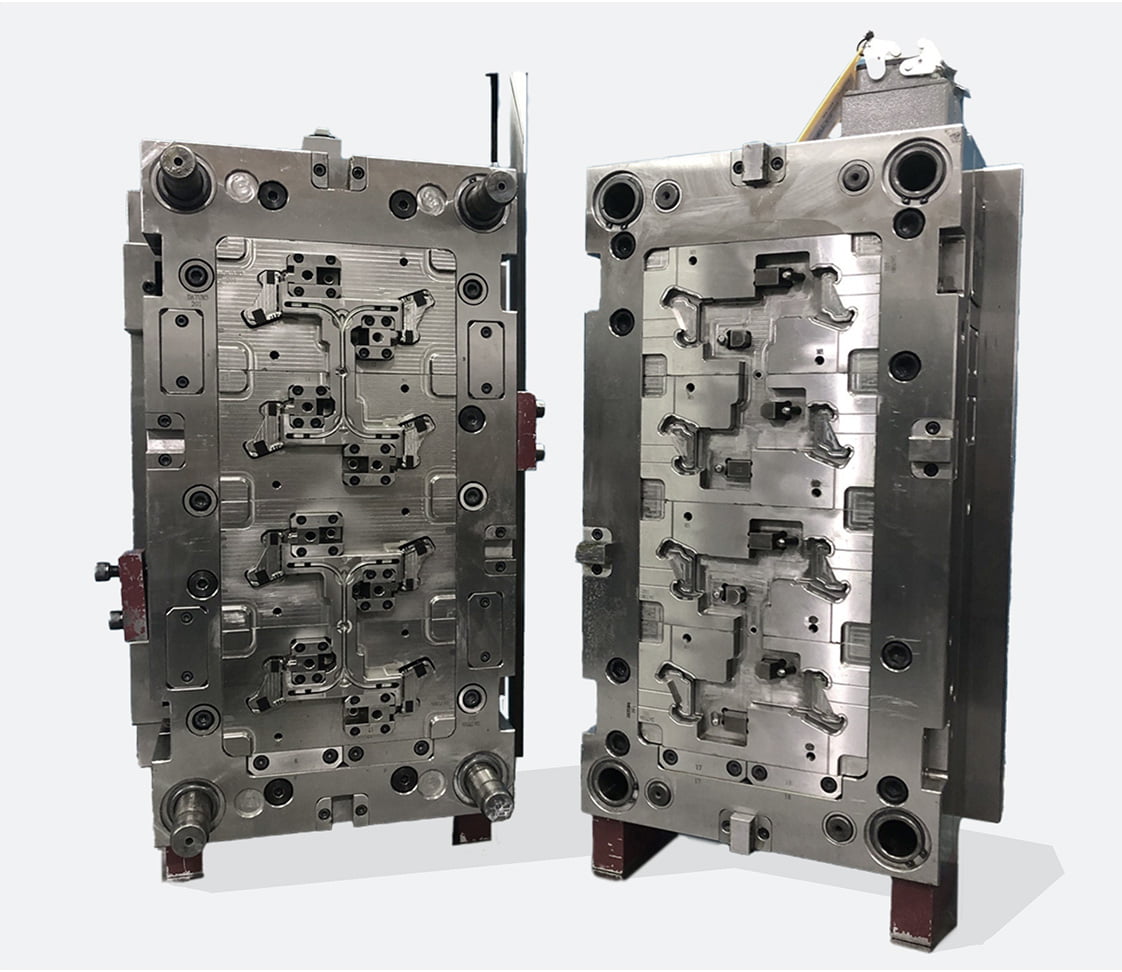
Insert molding combines a preformed component, often a metal threaded insert, sleeve, contact or connector, with an injection-molded plastic body in one controlled molding cycle. For defense products, this approach can reduce separate assembly operations, support repeatable positioning and place metal only where its properties are needed.
Why Insert Molding Matters in Defense Products
Military electronic enclosures, communication devices, electro-optical systems and other field equipment often need a combination of low weight, mechanical strength, electrical functionality and reliable assembly. Insert molding can integrate metal features directly into a polymer component, reducing the number of interfaces that must be assembled later.
The result depends on the complete design. Therefore, engineers must consider the polymer grade, insert geometry, surface preparation, mold design, processing parameters and environmental requirements together. Insert molding does not automatically guarantee a specific weight reduction, sealing level, mechanical strength or ballistic performance.
Key Advantages of Metal-Plastic Insert Molding
Fewer Assembly Operations
For example, operators can position threaded inserts, bushings, electrical contacts and selected connectors in the mold before injection. The polymer then forms around the insert. This can replace some separate fastening, riveting or post-molding installation operations, depending on the design. Fewer operations may reduce handling, work-in-process inventory and opportunities for assembly error.
Controlled Position and Repeatability
Dedicated mold features and loading controls locate the insert before each cycle. The customer must define the required positional and dimensional tolerances. The quality team then verifies them through inspection. No manufacturing process produces zero variation, so manufacturers should demonstrate repeatability against the approved drawing and control plan.
Weight Optimization
A polymer structure can use metal selectively at load-bearing, threaded, conductive or wear-critical points. This may reduce weight compared with a fully metallic design, but the actual saving depends on geometry, materials and performance requirements. Therefore, engineering analysis and product-specific testing should support every metal-to-plastic conversion.
Functional Integration
Insert molding can combine structural, fastening and electrical functions in one molded component. Examples include threaded mounting points, grounding features, connector interfaces and local reinforcement. Integrating these functions can simplify the bill of materials and create more compact assemblies.
Environmental Protection
Plastic can encapsulate selected areas of an insert and reduce the number of open joints in an assembly. However, resistance to moisture, dust, salt fog, chemicals, temperature cycling and vibration depends on the full product design. The project team must validate required IP ratings or military environmental tests on the finished assembly under the applicable specification.
Five Steps for Reliable Insert Molding
- First, define the operating requirements: Identify loads, temperature range, chemicals, vibration, ingress protection, electrical performance and applicable customer specifications.
- Next, select compatible materials: Match the polymer and insert material while considering thermal expansion, corrosion, adhesion, molding temperature and long-term service conditions.
- Then, design for manufacturing: Define insert retention, shutoffs, wall thickness, flow paths, gates, weld lines, draft and access for manual or automated loading.
- After that, control molding and cooling: Secure the insert, monitor critical process parameters and manage cooling to reduce movement, voids, flash and residual stress.
- Finally, inspect and validate: Verify position and dimensions, then perform the mechanical, electrical and environmental tests required for the specific product.
Early collaboration between product engineering, tooling and production is especially important. Explore Rimoni’s engineering and DFM, in-house mold manufacturing and injection molding capabilities.
Insert Molding for Military Electronic Enclosures
For a military electronic enclosure, insert molding may support threaded mounting points, connector interfaces and local reinforcement without machining the entire enclosure from metal. The surrounding polymer can also enable ribs, cable routes, clips and complex external geometry. Finally, the project team should confirm suitability through the product’s mechanical, thermal, electromagnetic and environmental qualification plan.
FAQ: Insert Molding for Defense Products
What is insert molding?
Insert molding places a preformed component, commonly a metal insert, inside a mold before plastic is injected around or against it. The process creates an integrated metal-plastic component in one molding cycle.
What is the difference between insert molding and overmolding?
Insert molding usually refers to molding plastic around a separately manufactured insert placed in the mold. Overmolding is a broader process in which material is molded over an existing substrate or previously molded part. The overmold can be soft or rigid, depending on the application.
Can insert molding reduce product weight?
It can reduce weight when a polymer structure replaces part of a metal component and metal remains only at critical locations. Engineers must calculate the actual saving for the specific geometry, materials and performance requirements.
Is insert molding suitable for low-volume production?
It can be suitable, but the business case depends on tooling cost, insert loading, part complexity, annual volume and the assembly operations eliminated. Manual loading may fit lower volumes, while automation becomes more attractive as volume and repeatability needs increase.
Discuss Your Defense Manufacturing Project
Rimoni combines product engineering, in-house tooling, injection molding and controlled serial production. Learn more about our defense and aerospace manufacturing, or contact [email protected] with your drawings, materials, volumes and qualification requirements.