
In equipment that a soldier carries for hours, every gram counts. Engineering plastic produced by injection molding cuts that weight while keeping industrial strength and precision. For this reason, defense manufacturers increasingly treat plastic as a metal substitute in carried military equipment.
Why Move from Metal to Injection Molded Plastic?
However, weight is only the first advantage. Engineering plastics also bring benefits that metal parts struggle to match:
- Corrosion resistance: plastic parts do not rust in humid or wet environments.
- Electrical insulation: available wherever the design requires it.
- Thermal insulation: the part stays easier to handle in very hot or very cold conditions.
At the same time, reinforced polymers keep the strength and dimensional precision that defense specifications demand. As a result, plastic as a metal substitute has become a practical choice across defense industries and military equipment.
Typical Applications in Carried Equipment
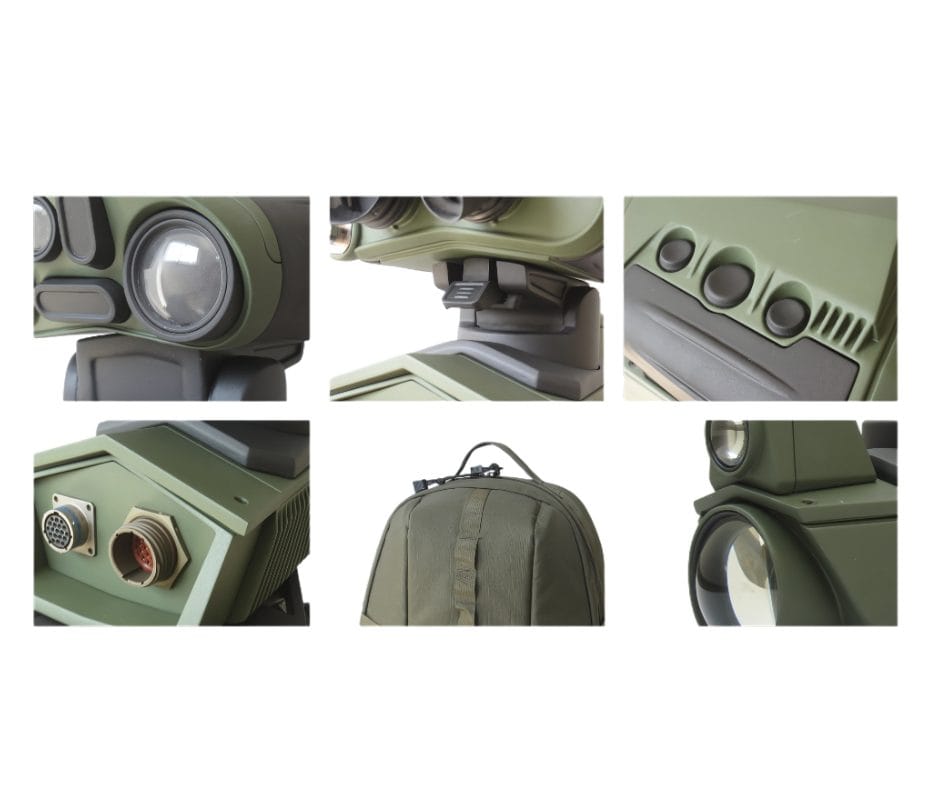
- Housings for observation and electro-optical systems: lower weight, wear resistance and advanced geometric integration. In addition, the housing protects against impacts and absorbs energy.
- Frame and grip components: parts for airborne systems, combat vehicles and personal weapons. As a result, lighter parts give the user a clear advantage in mobility and ease of use.
- Integrated functions: sealing, shock absorption and EMI shielding designed into the molded part. Consequently, the product needs fewer parts and fewer connections. Read more about this approach in Two-Shot Injection Molding for Tactical Gear.
What the Engineering and Mold Design Require
A successful switch from metal to plastic depends on a few engineering decisions made early:
- Correct material selection, usually a reinforced engineering polymer. See how polymer selection affects mold design.
- Flow simulation with Moldflow before the mold is cut.
- Walls at the optimal thickness for strength and moldability.
- DFM rules for injection molding, applied from the first design review.
Working under one roof also shortens timelines. At Rimoni, design, mold manufacturing, injection molding and assembly all happen in-house. It also reduces the failures that occur when a project passes between several suppliers.
For a detailed look at the transition process, read Transitioning from Aluminum or Machining to Plastic Injection in Defense Projects.
Industrial Experience and Manufacturing in Israel
Rimoni operates 120 injection molding machines at two sites in Israel. Therefore, the company can meet the tight timelines of the defense industry.
For years, Rimoni has worked with leading defense companies, including Elbit, Rafael, IAI and IMI, as well as smaller private companies in the field. Over that time, Rimoni has delivered the plastic-as-metal-substitute solution in many projects.
Frequently Asked Questions
Does injection molded plastic meet the strength requirements of carried equipment?
Yes. With the right reinforced polymer and a precise mold design, the part reaches the stiffness and cyclic durability that the specification requires.
What is the advantage over CNC machining of metal?
Injection molding produces highly identical parts and can combine several functions in one part. In addition, unit cost is lower in medium to large production series.